Hopeful storm clouds
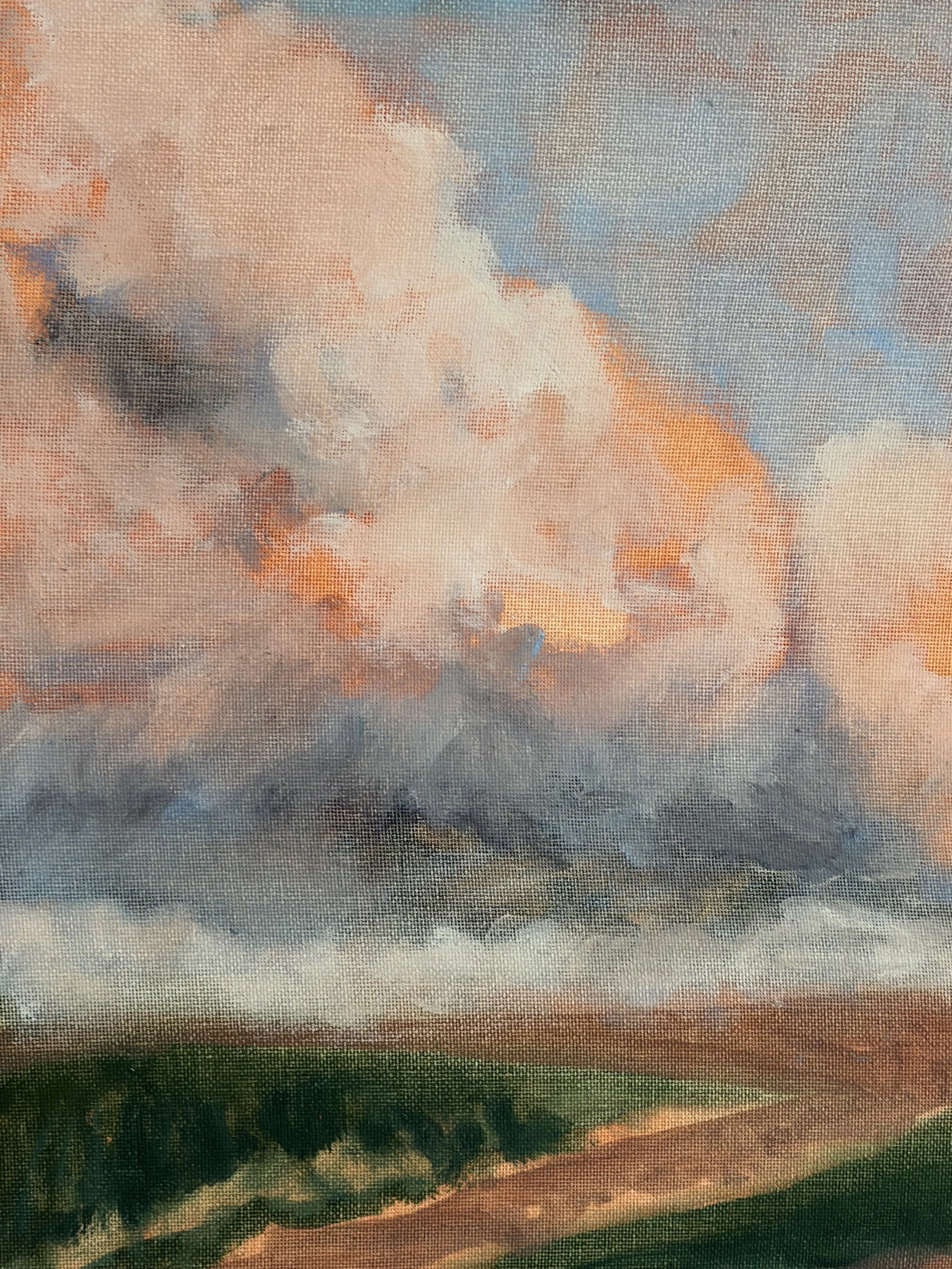
The painting above is an unfinished oil by my husband, Bill. He probably would have preferred if I had waited to share his finished painting. But I like the undone version. It speaks to the fact that you’re never finished with your grief.
I believe his art is made in part by his grief over Hannah, which fifteen years ago, he may not have been able to create. The sky, the stormy clouds, the fertile ground, and the dirt road seem to reflect his feelings of darkness and beauty, of an untraveled path, and the possibility of hope in a rich environment. If you find yourself on this storm-covered path that no one would have chosen to walk, it helps to have the company of others who know exactly how you feel, even if it’s a road they would never have chosen.
A couple weeks ago, Robin and I finished co-leading our winter grief group at Bloedel. It was sad to see this particular group end as we fell in love with each individual and the group as a whole. This group was especially tender because it was made up of bereaved parents who had all lost adult sons. Their stories were horrific and tragic, with common themes of mental illness, addiction, and suicide. It’s true to say that everyone came into the group anxious and fearful and feeling like they were the only ones who had experienced a loss such as theirs. But by the time the 8-week group ended, bonds were formed, honest feelings were shared, and hope was beginning to be restored.
Despite the sadness and tragedies of the deaths of their children, these people shared their hearts and souls. They bravely told their stories and talked about the children they had lost. Each person’s story was met with compassion, love and empathy. Robin and I may have set the tone, but it was the group members who stepped up to share their broken hearts. We were profoundly grateful to witness this special group come together and continue their healing.
Our goal in these groups is to teach these concepts:
1) There is no time line for grief. There is no cure and no “getting over it.” Everyone’s grief is their own, not to be compared to another’s.
2) There are no sequential stages of grief; there is simply who you were before the loss and who you are afterwards. Profound loss changes you.
3) Multiple feelings and thoughts can co-exist, even if they are contradictory; e.g. you can be sad, angry, and relieved all at the same time
4) The death of a beloved person does not end your relationship with them. You can continue your connection with them through dreams, conversations, writing, signs, and other mystical phenomenon
5) SAY THEIR NAMES. Bereaved people like to hear the names of their loved ones who have died, and especially like to share stories about them. It is also helpful to listen to the stories of others who have had similar losses.
6) Healing happens when you are broken open enough to bravely share your memories and feelings with yourself and with others.
7) Connecting with people who have had a similar loss can offer support and healing when you don’t know how you will survive the death.
8) Select friends and family members can offer comfort and support to those who are grieving, as well as individuals who are “further down the road” with a similar loss. They can offer hope and encouragement to those who are more newly grieving.
9) There are no right or perfect words to say to a bereaved person. But showing up with acts of kindness and love can help a lot.
10) Eventually, making new meaning in your life can allow you to bring your loved ones along with you. Healing a significant loss can be helped through meaningful, purposeful actions and connections
I have certainly found meaningful work in the individual and group sessions I do with bereaved folks. This work has enriched my life. Of course if I had a choice, I would rather have Hannah here. But she has guided me in helping others survive their most profound loss.